


ANDROGEN RELATED ALOPECIA
Androgenetic alopecia is a common form of hair loss in both men and women. In men, this condition is also known as male-pattern baldness. Hair is lost in a well-defined pattern, beginning above both temples. Over time, the hairline recedes to form a characteristic "M" shape. Hair also thins at the crown (near the top of the head), often progressing to partial or complete baldness.
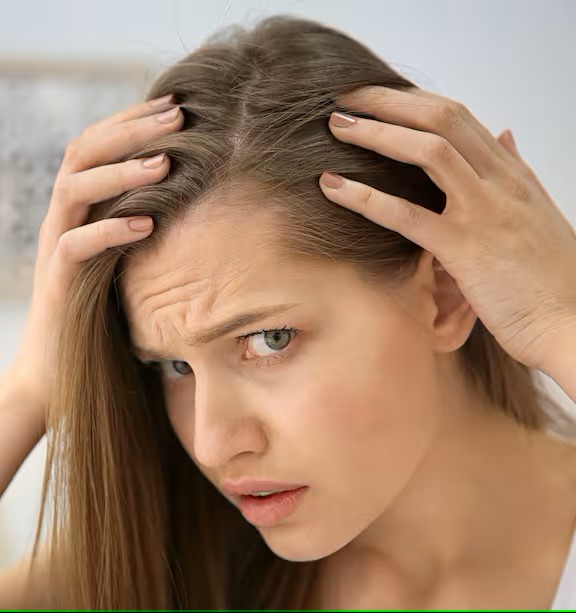
The pattern of hair loss in women differs from male-pattern baldness. In women, the hair becomes thinner all over the head, and the hairline does not recede. Androgenetic alopecia in women rarely leads to total baldness
Androgenetic alopecia in men has been associated with several other medical conditions including coronary heart disease and enlargement of the prostate. Additionally, prostate cancer, disorders of insulin resistance (such as diabetes and obesity), and high blood pressure (hypertension) have been related to androgenetic alopecia. In women, this form of hair loss is associated with an increased risk of polycystic ovary syndrome (PCOS). PCOS is characterized by a hormonal imbalance that can lead to irregular menstruation, acne, excess hair elsewhere on the body (hirsutism), and weight gain.
Androgenetic alopecia is a frequent cause of hair loss in both men and women. This form of hair loss affects an estimated 50 million men and 30 million women in the United States. Androgenetic alopecia can start as early as a person's teens and risk increases with age; more than 50 percent of men over age 50 have some degree of hair loss. In women, hair loss is most likely after menopause.
Causes
There are many different potential causes of alopecia. Hair loss - temporary or permanent - can be triggered by any number of factors. These can include allergies, irritants, toxins, burns, injuries, and infections. We also know that certain medications (especially anabolic steroids), chronic kidney failure, radiation, and chemotherapy can cause hair to fall out. Sometimes, hair loss may be due to a vitamin A overdose, iron deficiency anemia, a malfunctioning thyroid gland, fever, or pregnancy.
Symptoms and Complications
Thinning hair is the most obvious symptom of androgenic alopecia. In men, it begins at the crown, temples, or both. They also tend to get a "high forehead" that's associated with a receding hairline. This is less common in women. While men can go completely bald, women don't usually lose all the hair on the crown of the head.
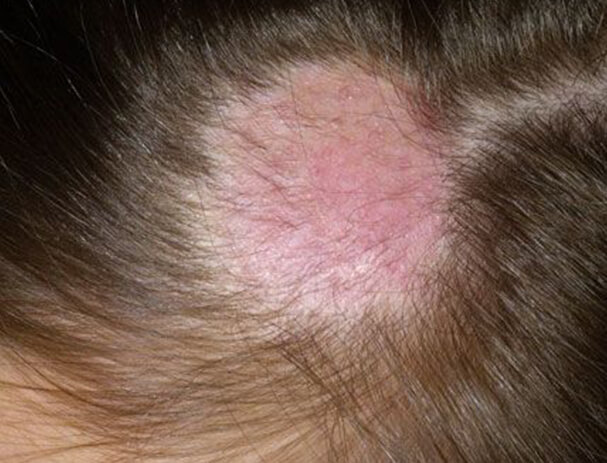
Alopecia areata appears as sudden losses of small round patches of hair, usually from the scalp, but sometimes from the face or body. The fingernails may be lightly pitted or stippled. The disease often comes and goes in cycles, with regrowth in between.
 Hello
Hello 

